
Why Winemakers Are Working With Fruit Beyond Grapes
A growing number of winemakers are looking beyond grapes, using apples and other native fruits to express what grows in their regions.
Written by Hank Zona
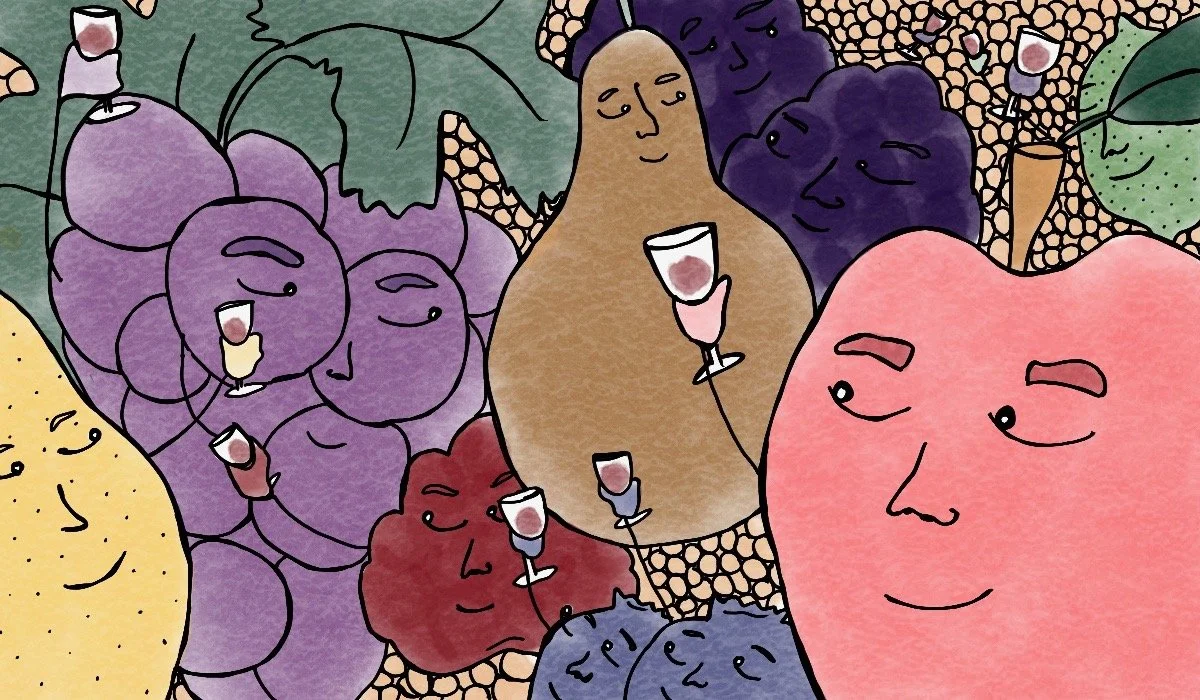
CHO Wines in Oregon’s Willamette Valley built a loyal following shortly after launching in 2020, thanks in large part to a strong social media presence and critically acclaimed early releases. By 2022, demand was high, but a spring frost wiped out much of the primary buds across the valley, severely limiting production.
To make up for the shortfall, David and Lois Cho turned to another local crop: apples. They blended Pinot Noir and Chardonnay pressings with juice from seven heritage apple varieties to create a co-ferment they called “Concidre,” meaning “reconcile” in French.
This is the kind of decision that might have once felt like a workaround. Increasingly, it has become something more intentional. Across the U.S., a small but growing group of winemakers are working beyond grapes, incorporating apples and other native fruits into their fermentations, not just out of necessity, but as a way to reflect what actually grows around them.
As our understanding of what constitutes wine continues to loosen, more producers are expanding their approach, blurring the line between wine, cider, and something harder to categorize altogether.
Ultimately, it was necessity that led CHO Wines to co-fermenting. Co-founder Lois Cho said, “It was crafted with the desire to reconcile Oregon’s bounty with a creative twist.”
The following year, they collaborated with a local cidery. That project, labeled as a cider, sold better than Concidre, suggesting customers were more comfortable approaching it in that context. They plan to continue exploring these projects alongside their core wine production, depending on what the growing season brings.
“We think being nimble to the vintage’s challenges us and can create unique opportunities in any given year so we will continue to look to collaborate because community is central to our philosophy,” Cho says.
Todd Cavallo of Wild Arc Farm has been at the forefront of much of the “old-is-new” experimentation in the industry over the past decade. He admitted to being “a bit cynical upfront” when he first created his “Sweetheart” label, using red grape must to make a pink cider, but quickly realized it aligned with the regenerative permaculture he and his wife were building on their Hudson Valley farm. As their farm yields more, he plans to experiment with other fruits like red currants, sea buckthorn, and aronia berries.
Jahde Marley can be best described as an advocate and community organizer for those less visible in the wine industry. Today, she continues that work through Zev Rovine Selections and by shaping ABV (Anything But Vinifera) Ferments, her program supporting winemaking with hybrid and native grape varieties while amplifying underrepresented voices in the industry. Marley also practices what she preaches through her “Love Echo” label.
Love Echo is her project in collaboration with Ben Jordan and Common Wealth Crush in Virginia. 2024 saw two releases: a still wine blending the hybrid Vidal Blanc with Petit Manseng—the latter widely seen as a signature grape and staple of Virginia’s wine future—and a pét-nat made from those same grapes, plus the hybrid Cayuga, infused with foraged pawpaws.
Co-fermenting with hybrids offers another way to highlight what grows best in a given place while supporting the preservation of native agriculture. While not a full co-ferment, the pawpaw infusion maintained the fruit’s unique character, one that is increasingly present across the eastern United States. The success of the first bottlings has already sparked plans for new co-ferments in the years ahead.
While some experiment beyond grapes and apples, Max Rose puts them side by side at Chertok Wines in Vermont’s Champlain Valley. Rose has gone from non-believer to proponent, initially dismissive of co-fermenting the two as a gimmick. But while making wine at home in Boston and needing to supplement his grapes, he discovered a result that, as he puts it, “tasted like home” and carried a distinctly New England character.
He later purchased a farm in Shoreham, Vermont—an apple growing mecca, in his words—and planted grape vines throughout the orchards. “The story of our farm is both crops,” he said. One of his co-ferments, “Midrash,” takes its name from the Hebrew concept meaning “to tell a story.” More than anything, he sees these wines as two crops in conversation.
Rose approaches them with a bread baker’s mentality, crafting what he calls “daily bread” wines—enjoyable, country-style bottles with inviting aromatics and long finishes. He continues to refine his process, experimenting with long macerations and adhering to natural winemaking principles.
Rose admits he has concerns about how to market the wines. “There is more reticence from the industry side than the consumer side,” he said. Those drawn to local products will drink it, but he’s learned not to overshare before pouring a taste. “If they hear it is made with apples ahead of time, they see it as something cheapened. But if they taste it blind and like it, it becomes cool.”
Cavallo perhaps summed it up best when he said, “We want to see what any fermented beverage using ingredients and flavors from this place can look and taste like–[and] to make delicious things to drink.”