
The Duo Reviving The Ten Bells
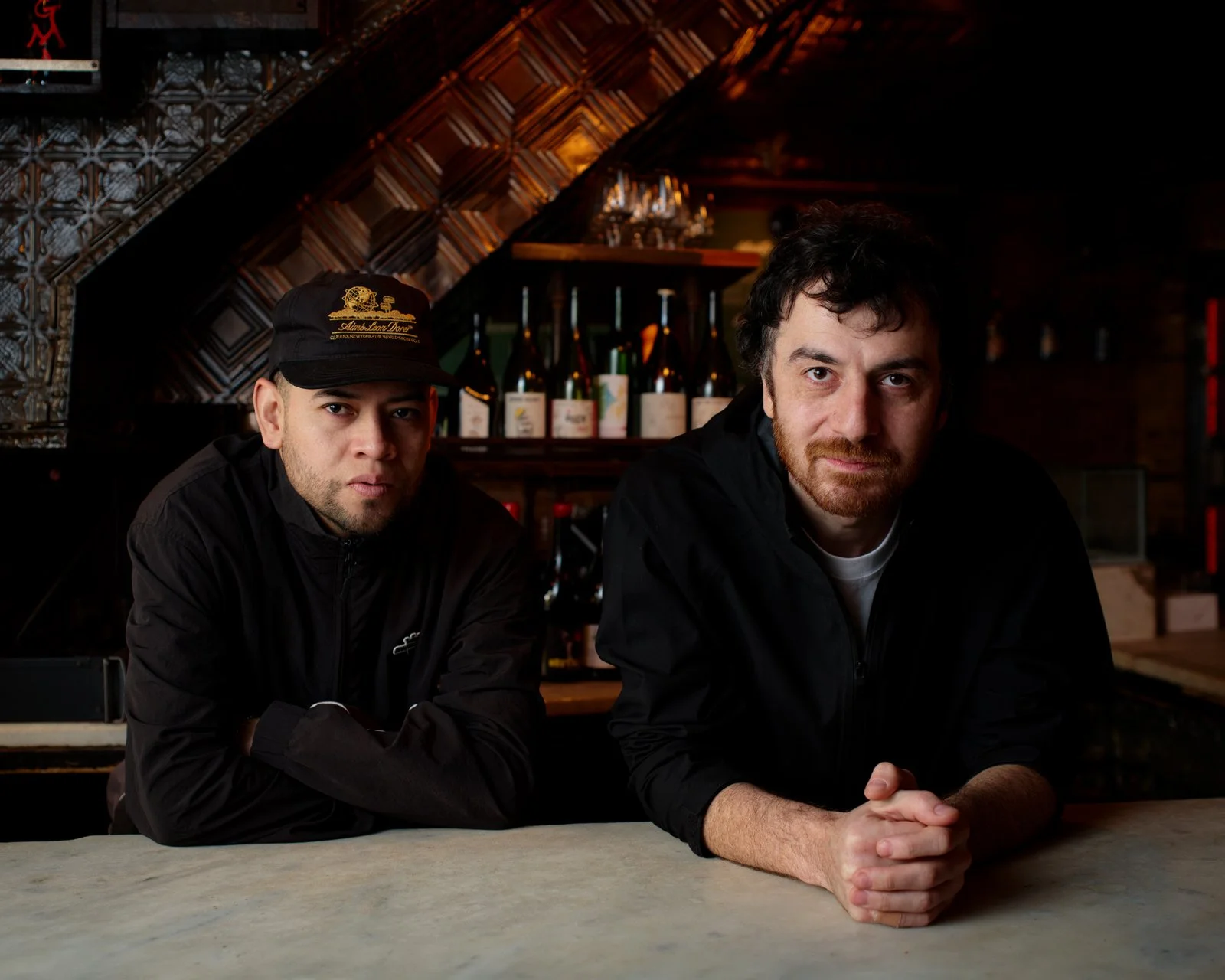
Fernando Martinez and Nodar Toronjadze are leading a new chapter for New York’s most iconic wine bar.
Written by Nathan Bodenstein
Photography by Jack Newton
In 2014, Fernando Martinez and Nodar Toronjadze were strangers: to each other, to the wine world, and most certainly to operating within the organized chaos of The Ten Bells, the wine bar on Broome Street that, since its opening in 2008, defined New York’s natural wine scene for the following decade. They were bartenders, runners, servers, and cooks, almost every role one could hold at a wine bar. They grew up learning in arguably the most storied wine bar in New York, perhaps even the country.
When it first opened, The Ten BeIls played a central role in shaping New York’s wine scene. Toronjadze and Martinez watched from behind the bar as guests tasted bottles from producers like L'Anglore, Marcel Lapierre, and L’Octavin for the first time. As the wine bar grew into an industry hub, they also saw some of the most respected figures in the wine world walk through the doors.
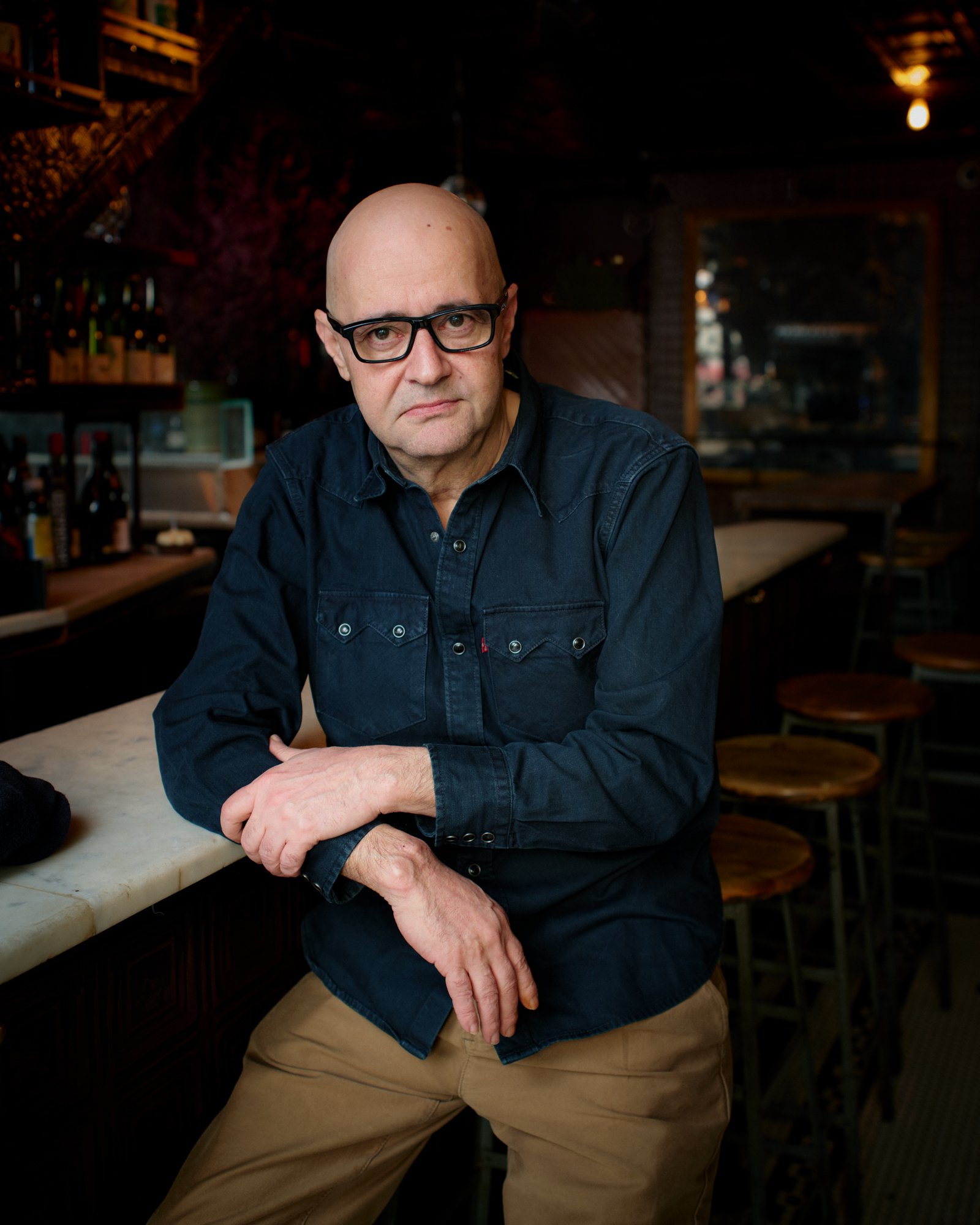
Yassine Bentaleb; Photographed by Jack Newton
Now, two years after opening their Lower Manhattan wine bar Cellar 36, Martinez and Toronjadze are adding a new title to their portfolio and returning to the place where it all began, but not as servers. This time, they’re stepping in as managing partners at The Ten Bells, alongside one of the last remaining original owners, Yassine Bentaleb.
“It’s exciting to have the authority to fix whatever needs to be fixed and use our vision to make it be what it could be.” Toronjadze says. Together with Bentaleb, the duo are leading the next chapter of the wine bar where they built the relationship that led to their first business together. Ensuring the future of The Ten Bells holds a special significance to them, as it does for the staff and countless regulars who’ve enjoyed it over the years. “It feels like I’m going back home to where I grew up,” Martinez says.
Early on in their hospitality careers, both Martinez and Toronjadze slowly worked their way up at The Ten Bells, learning many aspects of the business first hand. “Ten Bells is a special place to work,” Toronjadze says. “You’re not just a bartender or just a server. You’re running everything.” Martinez started in the kitchen before moving onto the floor, eventually doing everything from running food to bartending.
But early on, they didn’t actually work together much. The schedule rarely overlapped. Different pairs of staff would work different nights of the week, and unless your shifts lined up, you might barely see each other. It wasn’t until years later that they started sharing shifts regularly and realized how naturally their working styles complemented each other. “I know how to observe the room,” Toronjadze says. “Fernando is great at talking to people, opening bottles, and making friends. If he’s spending ten minutes with a table, I can run around and do the dirty work behind it.” That balance became the foundation of their partnership.
Those were also the years when The Ten Bells was at its most electric. Nights regularly stretched into the early morning hours. Bottles were opened loosely, and staff and regulars blurred together as the night went on. “We were spoiled,” says Toronjadze. “We were opening so many good bottles. There were nights we were finishing up at four or five in the morning,” he recalls. “Sabering bottles, cutting our hands trying to saber more bottles, dancing, drinking more after we closed, and makeshift bocce ball games. Those are the fun memories.”
But beyond the late nights, what made The Ten Bells special was its role in shaping New York’s wine culture. The Ten Bells was the first natural wine bar in New York, opening in 2008, a time when the natural wine movement was in its infancy. Today, natural wine-focused bars are easy to find in cities throughout the U.S., not just New York anymore. The original founders—Yassine Bentaleb, Philippe ‘Fifi’ Essome, and Fabrice Vautrin—simply poured wines they loved, even if they weren’t the typical bottles most New Yorkers were familiar with, creating a space for themselves and their friends to drink them.
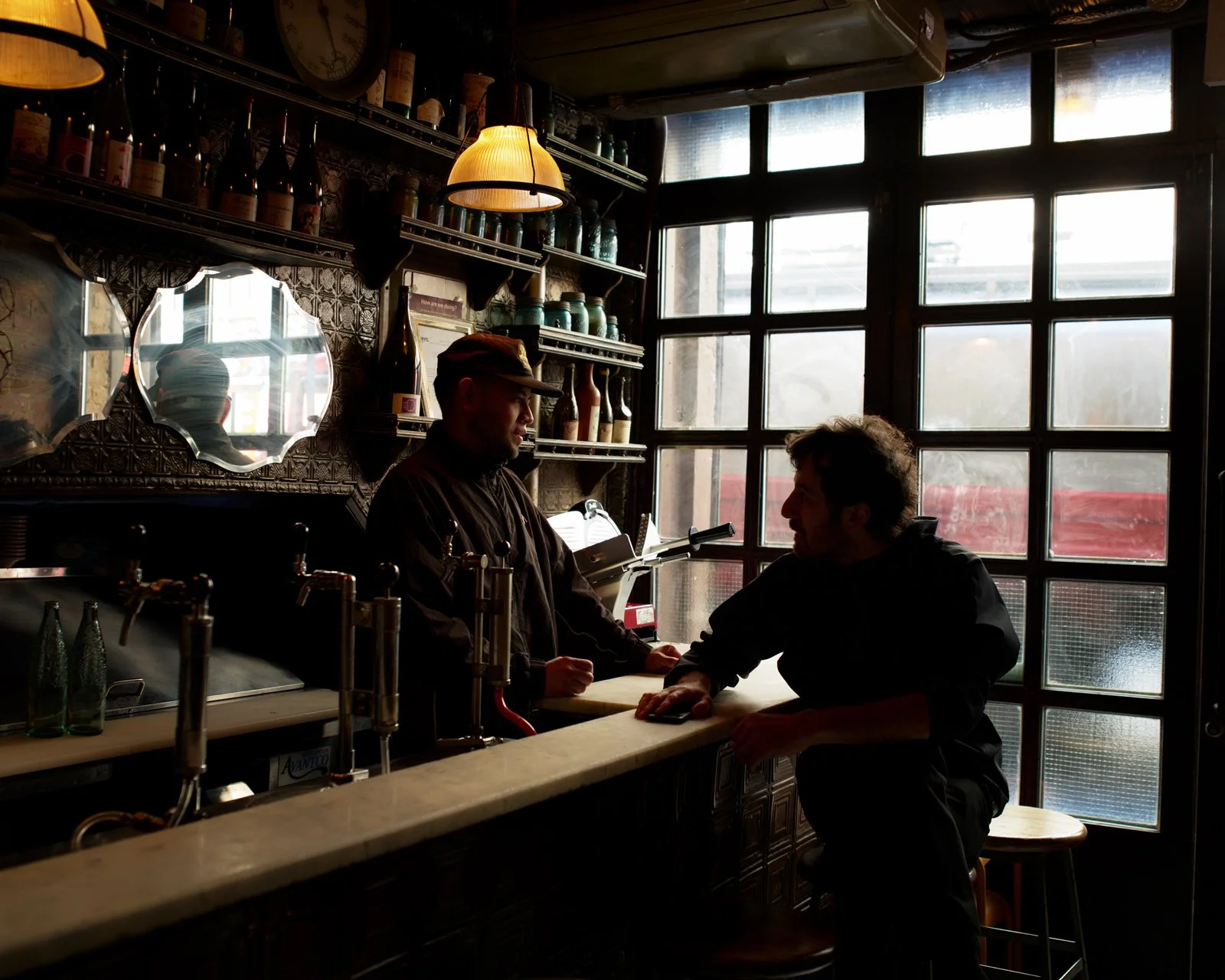
Fernando Martinez and Nodar Toronjadze; Photographed by Jack Newton
José Leão, who was part of the team that opened The Ten Bells, still remembers how different the landscape felt back then. “It’s crazy to think how big natural wine is now, and how small it was back then.”
Even in the midst of the financial crisis, the bar quickly became a gathering place for people curious about a new style of wine. “People fell in love with these wines, the coziness of the place, the small plates,” Leão adds “Even though it was the height of the financial crisis, The Ten Bells offered a place where you could have a great glass of wine and something to eat without spending a lot.”
For Leão, seeing Martinez and Toronjadze step into ownership feels like the right kind of continuity. “I’m very happy that Fernando and Nodar are back there,” he says. “They’ll bring it back to life like in the old days.”
Early regulars remember the atmosphere in those early days as a cave-like bar: a dark, crowded space where visiting winemakers would suddenly appear with a new bottle in hand. “It felt like a cool club you could join for the night,” recalls Maya Pederson, who worked nearby at Wine Therapy. “It felt like a very selective list full of gems and wines I had just discovered.”
That energy is exactly what Martinez and Toronjadze hope to bring back.
When the opportunity to partner in The Ten Bells first surfaced earlier this year, it came almost by accident. The two had approached Bentaleb about something entirely different: opening a wine shop somewhere in Lower Manhattan, but Bentaleb had a different idea.
“He basically said, ‘How about you guys come into Ten Bells with me?’” Martinez and Toronjadze both recall.
The decision felt natural. Bentaleb had known the pair for over a decade and trusted they understood the spirit of the place better than anyone else.
“He could have sold the bar many times,” Toronjadze says. “But him approaching us shows how much he cares about what Ten Bells represents.”
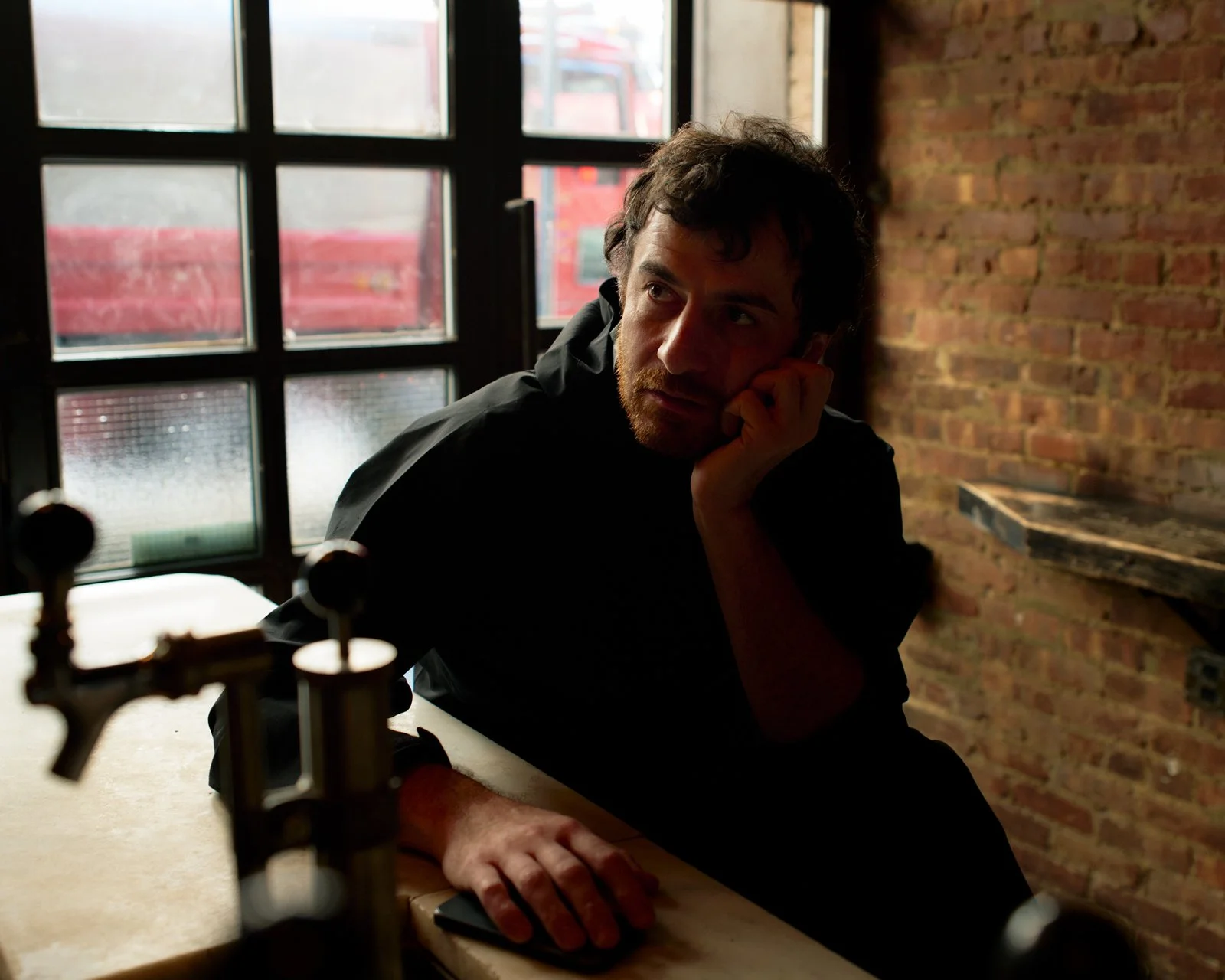
Nodar Toronjadze; Photographed by Jack Newton
For Bentaleb, the transition felt obvious. “It’s the easiest thing ever,” he says. “They’ve been working here for years. They know the house and the dynamics. We call it an organized mess, and now we just have to organize it.”
Martinez and Toronjadze have started working shifts behind the bar, slowly stepping back into the space while the ownership paperwork moves through final stages. For them, the goal isn’t reinvention. It’s preservation.
Most of the updates will be subtle. The flooring behind the bar needs repair. Barstools will be refinished. Small fixes, nothing dramatic. “It’s like restoring an old piece of art,” he says.
Walking through the space now, Toronjadze says he’s still discovering small details he never noticed when he worked there years ago: hand-painted stripes on the walls, old artwork tucked into corners, tables that feel almost like artifacts.
What matters most is bringing back the culture that made The Ten Bells what it was. For Martinez and Toronjadze, that starts with the wine. The list will reflect the same forward-thinking producers they’ve championed at Cellar 36, while continuing the tradition The Ten Bells built its reputation on: introducing new winemakers alongside established ones, all within a casual, unpretentious environment, comfortable for both wine nerds and casual drinkers alike.
As Bentaleb put it, “If you want to talk wine, we talk wine. If you don’t want to, we don’t. It’s not a five-star restaurant, it’s a saloon.”