
How Eric Asimov Fell in Love with Food, Wine, and Writing
The New York Times wine critic reflects on growing up in a family of writers, his early years at the paper, and the food and wine cities that have surprised him most.
Written by Nathan Bodenstein
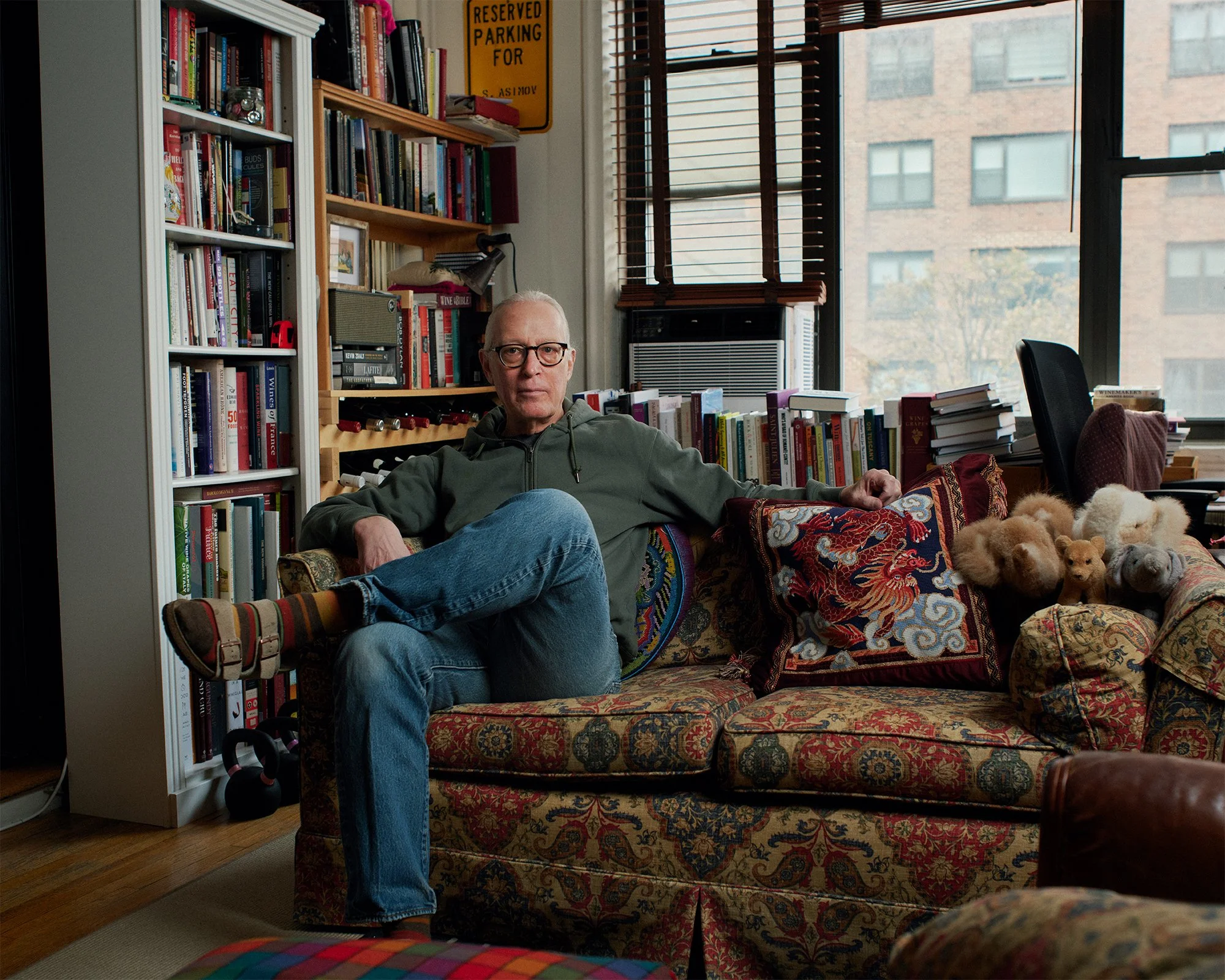
Eric Asimov, photographed by Jack Newton for SWURL
Across more than four decades at The New York Times, including the past twenty-two years as its Chief Wine Critic, Eric Asimov has become one of the wine world’s most influential voices. He is one of the few full-time wine critics still working at a major U.S. newspaper, a position that carries tremendous weight despite becoming more and more of a rarity in the contemporary media landscape.
That version of Eric is familiar. It’s also incomplete.
Over the past two years, through phone calls and breakfasts at restaurants like Balthazar, Joseph Leonard, and Café Cluny, I’ve come to know a side of Eric that rarely appears on the page. In talking with friends, many of them entrenched in the professional world of wine, I realized how little any of us really know about him. Not just how he became a critic, but how he learned to think, talk, and write about wine in a way that is entirely his own.
Eric grew up surrounded by journalism and ideas. His father, Stanley Asimov, was a writer and vice president at the Long Island newspaper Newsday. His sister, Nanette Asimov, spent decades as a reporter at The San Francisco Chronicle. His wife, Deborah Asimov, spent nearly forty years at The New York Times and has edited the papers Best Seller List since 2001 until she retired in 2017. And his uncle was Isaac Asimov, one of the most prolific and imaginative writers of the twentieth century.
Still, lineage only explains so much.
What follows is a conversation that spans his first encounters with wine on a family trip to France as a teenager, how he learned to write by editing articles at his kitchen table with his dad, and the experiences that continue to shape what he pays attention to today.
This interview has been edited for clarity and length.
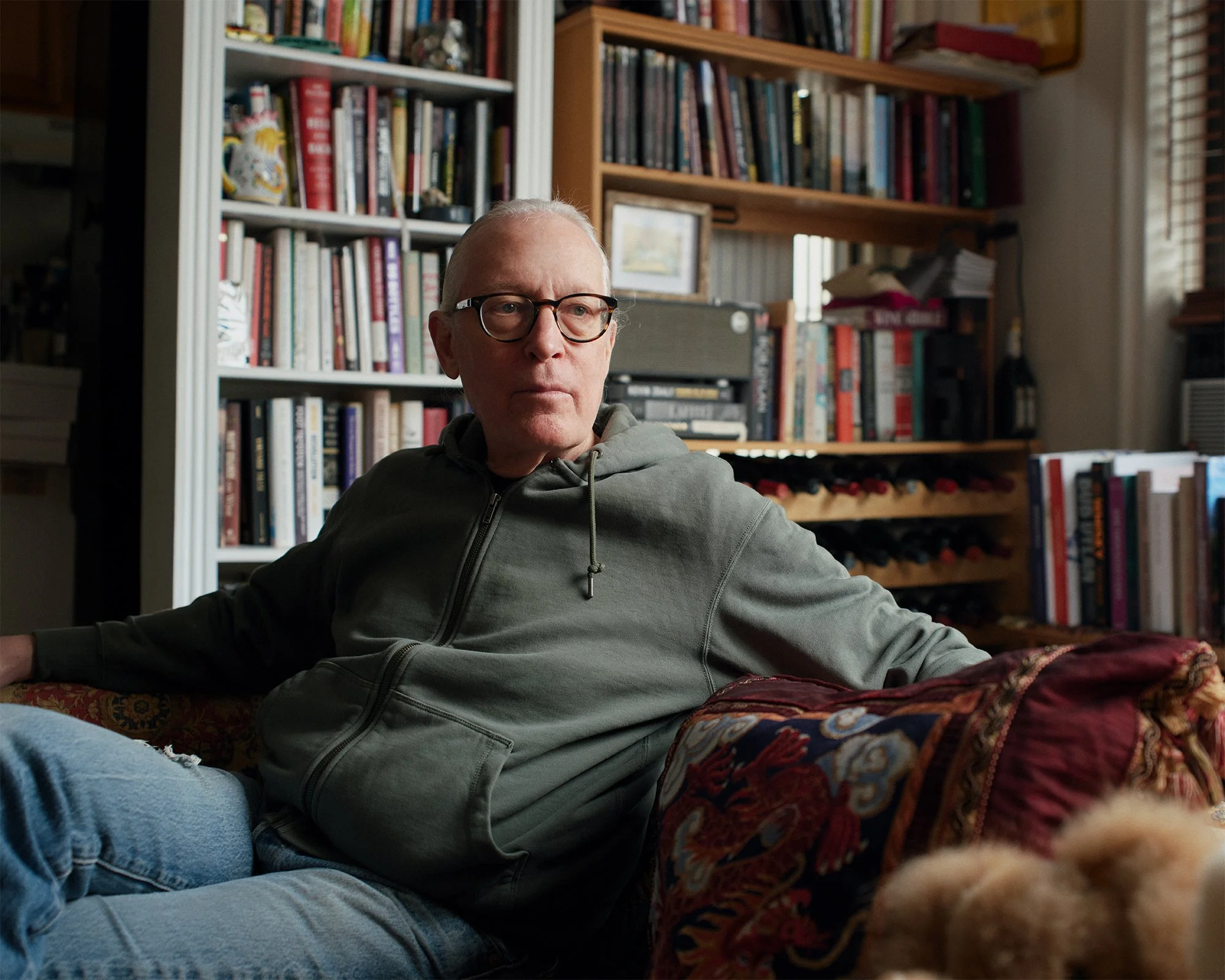
Photo by Jack Newton
Where did you grow up and what kind of relationship did your family have with food and wine?
I grew up on Long Island in the 1960s and ’70s, which was really the beginning of a major transformation of American food, but I was there right at the beginning of it.
At that time, a lot of American food was convenience food: canned things, TV dinners, that sort of thing. I ate my share of those, but my mother, who did the cooking, was devoted to Julia Child and every once in a while she would try to cook something from one of Julia’s books. My parents loved to eat, but most of the time it was the standard American diet and there was really no wine in the house except when guests came over or on holidays.
Everything changed when my parents went to France for the first time and took me with them when I was 14. I was kind of an unwilling passenger being a young teenager but the food in France, like many people of my generation, just turned my head. The food was so vibrant and alive compared with what we were eating in the U.S. You had the beginnings of a food revolution in America, but there still wasn’t great produce, great products, or even much discussion about them.
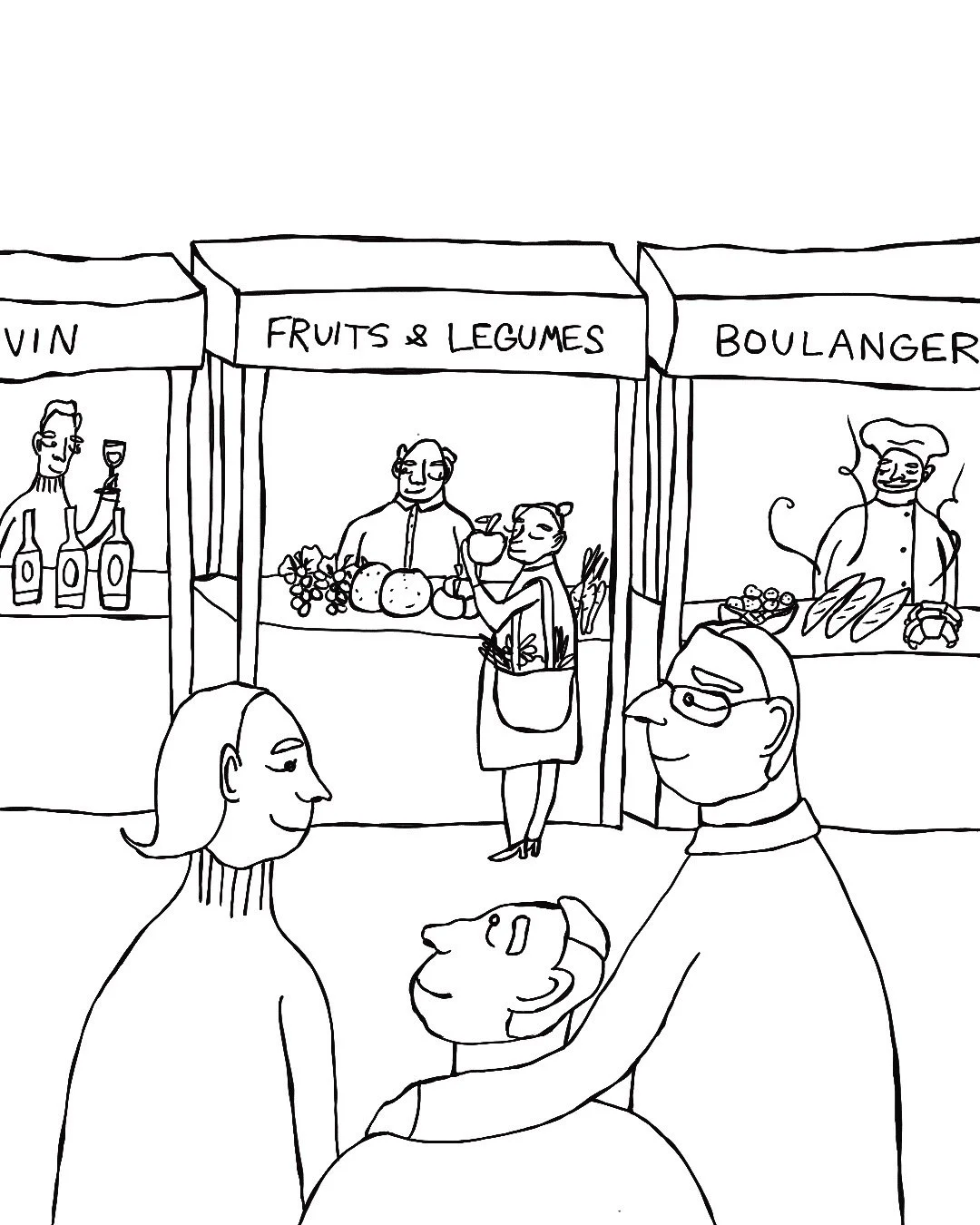
Illustrated by Cerise Zelenetz
When you returned from that trip, what impact did it have on you?
I just became personally obsessed with food and, by extension, wine even though I was a teenager at the time. In France, they’d give you a little taste at the table. It was clear that wine was simply part of the dining experience.
I became that annoying kid who would go into the city and stop at every restaurant on the block just to read the menu. Eventually I learned a bit of cooking from my mother. Once I got to college, after the usual freshman experience, some friends and I lived off campus. We cooked for ourselves and always had a bottle of wine on the table. Usually it was rotgut, the cheapest thing we could afford, but it [a meal and a bottle of wine] became a natural association.
When did that curiosity turn into something more serious, especially with wine?
That really happened in graduate school. I was at the University of Texas at Austin in the early ’80s, and I had a group of friends I cooked with regularly. We always drank wine with dinner and mostly the same cheap stuff.
One day I was the one buying the wine and, more or less by accident, I picked up a bottle of an Italian red because we were probably having spaghetti. It turned out to be the best wine I had ever tasted: it was a bottle of Giacomo Conterno Barbera d’Alba 1978. It blew my mind in the same way that first great meal in France had.
At that time I thought, “Okay, now I really have to learn about wine. It can’t just be a question of drinking whatever’s around. I have to learn about it because this was so good and so much fun. I need to know how to do that.”
I was a very self-sufficient and independent kind of kid. So I always felt I had to learn things myself so I could be in control of what I was eating and drinking.
Were you studying journalism at that point?
No, I actually never studied journalism. I was in an American Studies program, which is a multidisciplinary mix of history, literature, film, pop culture. It was an academic track and I never intended to become a journalist. So, I’ve never studied journalism, and I’ve never studied food or wine in an academic sense. I’ve ended up doing something I’m essentially self-trained for.
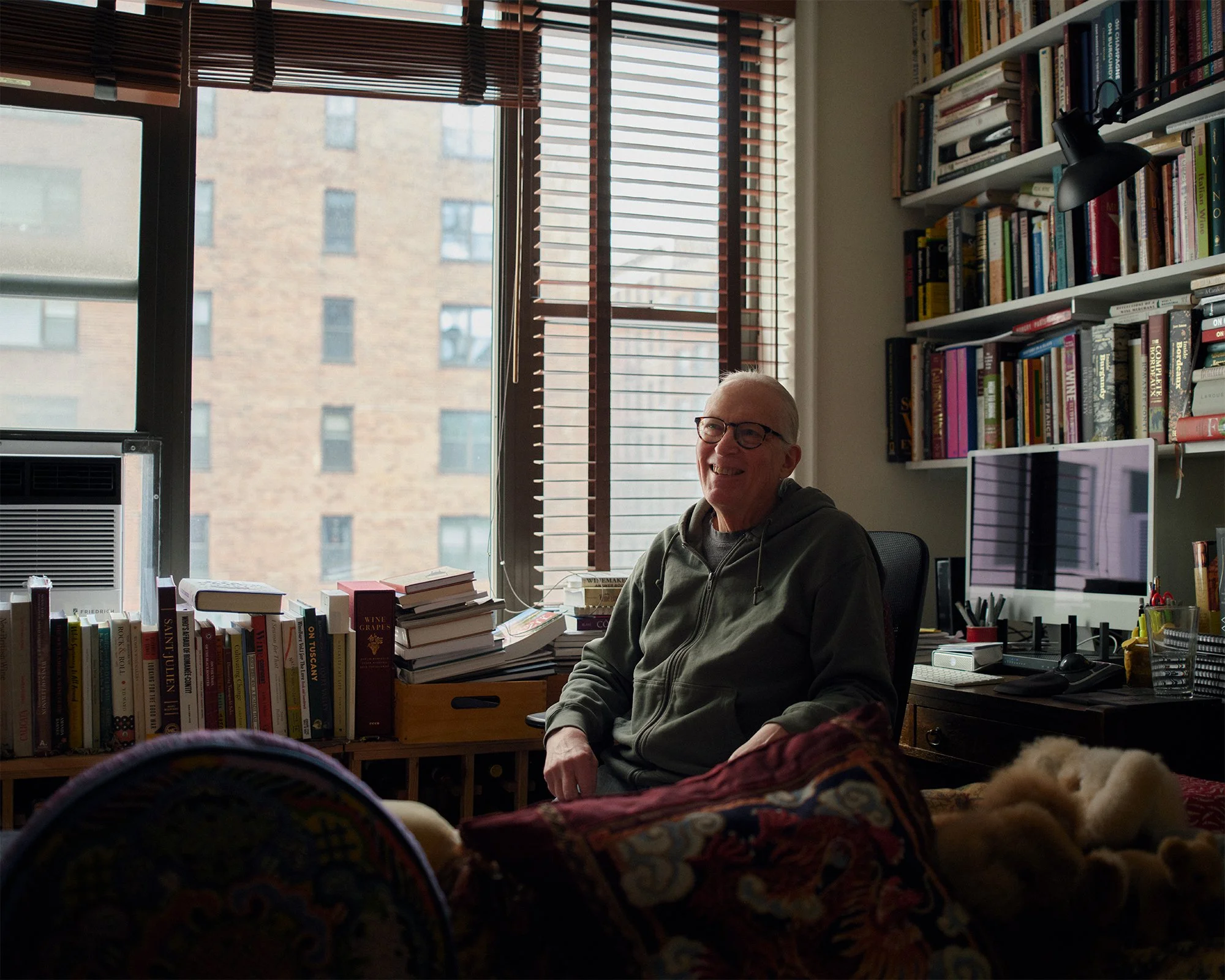
Photo by Jack Newton
You grew up surrounded by words with your father at Newsday, your uncle Isaac Asimov shaping science and storytelling. How did that environment influence how you think about writing, and how did you actually start to become a writer?
I always wanted to write. In an academic environment you’re constantly writing, especially in the liberal arts world, so that felt natural. And as you said, writing was important in my family.
When I was a teenager, my father told me, “Whatever you do, you’re going to have to be able to write.” His ambitions for me were things like being a lawyer or maybe running a newspaper. But he also pointed out that people in academia and the law weren’t known for being good writers, they were known for some of the most turgid writing around.
So he essentially sat me down at our kitchen table and taught me how to write by teaching me how to edit. He worked at Newsday, the Long Island newspaper, and he’d bring home unedited stories that people had submitted. We’d sit at the kitchen table and go through them so I could see the difference between good and bad writing, and learn how to fix the bad.
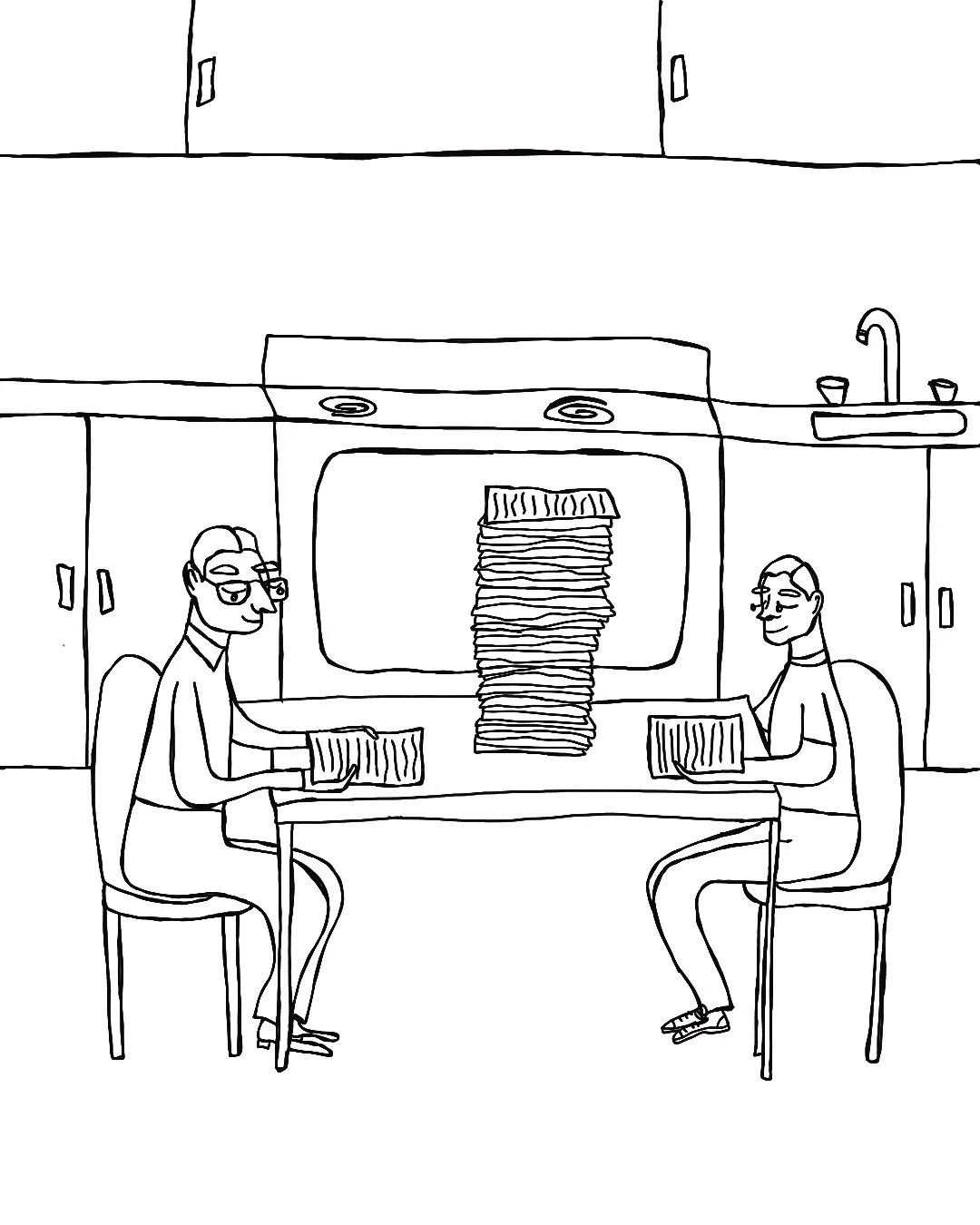
Illustrated by Cerise Zelenetz
That’s basically how I became a writer, by becoming an editor first. I would say to this day, I don’t think of myself as a great writer. Everything I write I go back over and edit ruthlessly. That’s the part I’m good at.
Did you ever picture yourself more as an editor than as a writer?
No, never. I’ve done editing, but it was always a means to an end. I wanted to write.
There is a kind of self-expression that comes with editing. If you’re an editor, you’re by default overseeing people and helping them express what they want or need to say. But I work better independently. I’m better at figuring out what I want to say than at helping other people clarify their own ideas. I’ve been an editor, but I found that part of the job—especially the hand-holding—a very frustrating experience.
You mentioned your uncle, Isaac Asimov. A lot of people I’ve spoken to leading up to this interview didn’t put together that you’re related, and he’s one of the most prolific science fiction writers in history. Do you have early memories of him that stuck with you, especially in terms of writing?
My memories of him are more from my teenage years than from childhood. When I was young, his family lived in a Boston suburb for a long time because he was teaching biochemistry at Boston University, so we didn’t see them that often. When I was a young teenager, he moved to New York City and we saw him much more. He and my father were very close.
What I remember about him is probably similar to what many people who knew him remember: he was brilliant and very funny, but also very self-involved. He could be the life of the party or the black hole at the center of it. But he was very funny and eventually it became a joy to tell him a joke he hadn’t heard before.
Do you remember going out to eat or drink with him when he had moved to the city?
Yeah, he loved food. He wasn’t much of a drinker, though every once in a while he’d order some sort of a bizarre cocktail like a grasshopper. But my father loved to eat, and my uncle lived on the Upper West Side, so we’d go to restaurants in his neighborhood that were convenient for him.
Some of his favorites were Shun Lee West, which was a well-known Chinese restaurant, and Tavern on the Green, which wasn’t a great restaurant but was a beautiful place; and other places that were very truly eccentric in a way much like 1970s America and don’t really exist in that form anymore.
I’d imagine that growing up with such creative figures, your uncle with his imagination and your father with his work at Newsday, had a significant influence on you.
It was definitely an environment of reading and writing. You see what’s going on around you and imagine yourself doing it, but maybe not in a precise kind of way. I never sat there wanting to become a journalist but it became a fallback when I realized academia wasn’t going to work out for me.
My younger sister, on the other hand, did exactly what my father did: she went to Columbia Journalism School, became an excellent journalist, worked at The San Francisco Chronicle for forty years, and taught journalism and lectured about it. For me, journalism was more of a means to pursue my interests.

Did having your sister at The San Francisco Chronicle ever make things feel competitive between you?
No, not at all. At least not from my point of view. I think she does great work and she’s an investigative reporter who does things that are not really my skillset and I like to be an opinion writer and that’s not really what she wants to do.
What were your early days like at The New York Times?
When I got to The New York Times, as a fairly young person, I realized I could freelance food and beverage stories to the food section. That was a revelation because the whole world of food writing just didn’t exist in the same way it does now. Food and wine weren’t considering glam professions like they became today.
How has food coverage at The New York Times changed from your early days there to now?
When I started writing for the food section, it had terrific writers: Frank Prial was our wine columnist, a great writer, very smart and was a major influence on me. Bryan Miller was the restaurant critic, Marian Burros, who just passed away, was instrumental in looking at the relationship between food and health, and Florence Fabricant, who still writes for The Times, was there as well. It was a rich moment for American food and wine culture because there weren’t a lot of places like that.
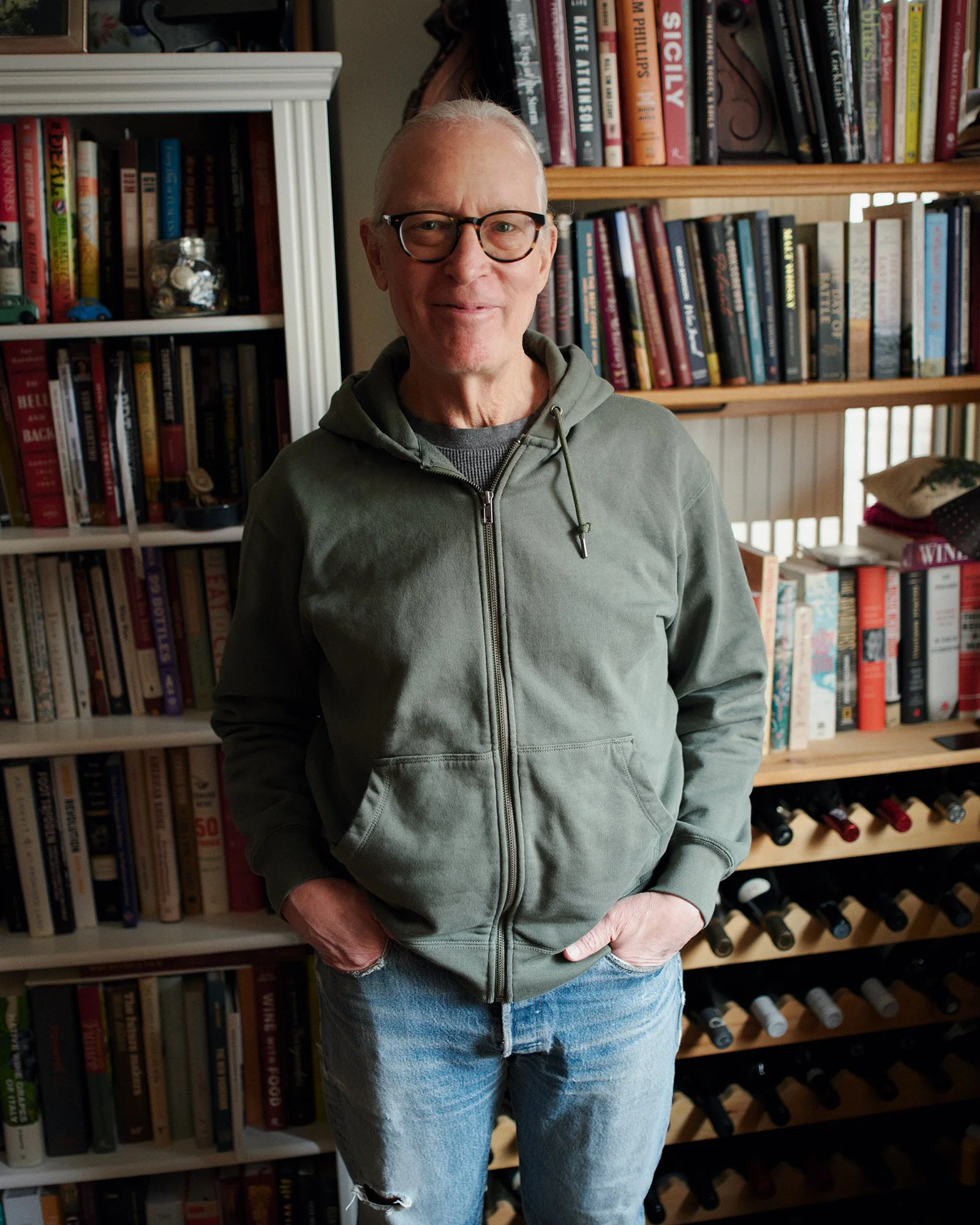
Photo by Jack Newton
The Times’ section then was called “Living.” It began in the 1970s and coincided with a growing interest in food in the U.S., which in turn coincided with growing prosperity, having disposable income, and post–World War II economic expansion and the advent of jet travel. People could suddenly go around the world and taste different cuisines, and those cuisines were starting to show up in the U.S. in forms more representative of what people actually ate in those countries, rather than heavily adapted versions.
It was a rich moment for American food and wine culture, and that’s when the modern American wine movement really took off.
What did that shift look like from your vantage point?
It’s easy to focus on critics like Robert Parker but I’d say it was more about the winemakers. People like Robert Mondavi in Napa Valley were transforming what had been a sleepy farming place, where wine grapes were just one fraction, to a place dominated by growing grapes for wine and a very wealthy kind of Disneyland for wine. But that didn’t exist back then in my childhood.
It’s amazing how much has changed in a relatively short period of time.
Absolutely, and I looked at wine lists today. If you looked at a great restaurant wine list in the early 1980s, it wouldn’t have looked all that different from a great wine list from a restaurant in the 1880s. Compare that to now. Today’s lists are full of wines most people had never heard of back then, and the quality is great. The change over the last 40 years has been incredibly accelerated.
A lot of coverage, ours included since we’re based here, can be very New York–centric. When you think beyond the city, what places have surprised you most in terms of food and wine?
The food and wine culture in big cities around the country is tremendous, but what continually surprises me are the smaller cities and even small towns.
It’s not predictable where you’ll find a great restaurant or an interesting wine list, but it is predictable that you’ll find them if you’re serious about looking. For a long time, once you got outside major cities, it was steakhouse culture and a lot of chain restaurants.
And that was another thing that happened when I was growing up. You had food writers like Jane and Michael Stern, who wrote a series of books called Roadfood, and Calvin Trillin, a great writer at The New Yorker, but in his kind of other life, he loved food and these people were among the first to really track down the remnants of regional cuisines at a time in the 1960s when they were disappearing as the interstate highway system was constructed and television were creating a national culture rather than a regional culture. People in different parts of the country often felt a kind of shame about what they had eaten for years; they wanted, in quotes, to be more “sophisticated.”
Their work was an early, big recognition that regional cuisines should be cherished, not discarded. In a lot of ways, that fight still continues to this day, but today you see a much greater appreciation for those small places.
I’ve gone to a lot of places where you wouldn’t expect to find great food and wine culture, and you do.
Which of those places surprised you the most?
Birmingham was a big surprise the first time I went, maybe a little more than 10 years ago. I knew they had a kind of regionally famous chef, Frank Stitt, often called the Alice Waters of the South, but I didn’t realize how engaged the local wine community was. I gave a talk there on wine, and a local wine society showed up. They were so interested in wine and had such good questions and pointed out a bunch of different places in the area where you could get great wines.
I mentioned television knitting together the country in the 60s, but, in recent times, the internet has also created communities that aren’t limited by geography. People in Birmingham can talk to people in Detroit, Sicily, Slovenia or New York. You can find like-minded people all over the place. I guess it’s a different question if you have enough of an audience to support good restaurants and good wine, but I’m constantly surprised by what you see in cities you least expect like Kansas City, Milwaukee, Tulsa, and Oklahoma City.
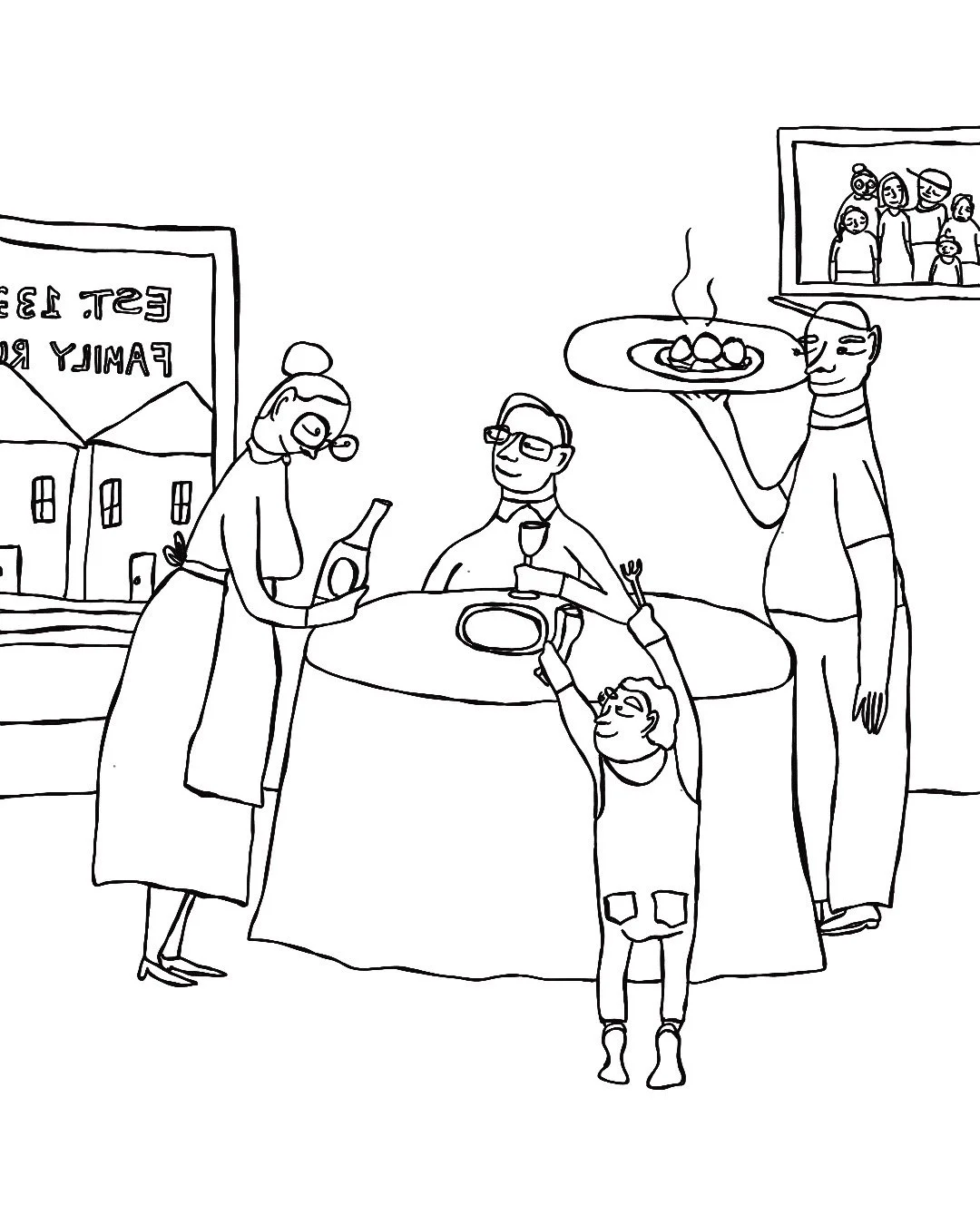
Illustrated by Cerise Zelenetz
The Times looms so large in journalism. Many writers dream of ending up there. What do you remember from your early days at the paper, and what did it teach you about writing at that level?
When I was interviewed for a job at The Times, one of the questions was, “Who are your favorite writers here?” It’s basically a test to see if you actually read the paper. I’d been reading it my whole life, so it wasn’t a hard question. I mentioned Frank Prial among my favorites, and I think that surprised some people. He was a great writer, and the overall level of writing in the published newspaper was very high, but like with any institution, though, once you see how the sausage is made, you’re a bit surprised and I had a firsthand experience of that. But I can’t say that I remember ever being afraid to write for The Times or feeling I didn’t measure up. I kind of felt like that was where I belonged.
It’s also important to remember that I started there in 1984 and, at that time, journalism was a thriving profession and every city had a great newspaper or sometimes even multiple great newspapers. You didn’t have to work for The New York Times. You could work for The Chicago Tribune, The Los Angeles Times and so on. But that’s not true anymore. Between the rise of digital publishing and the 2008 recession, newspapers and journalism have been hollowed out.
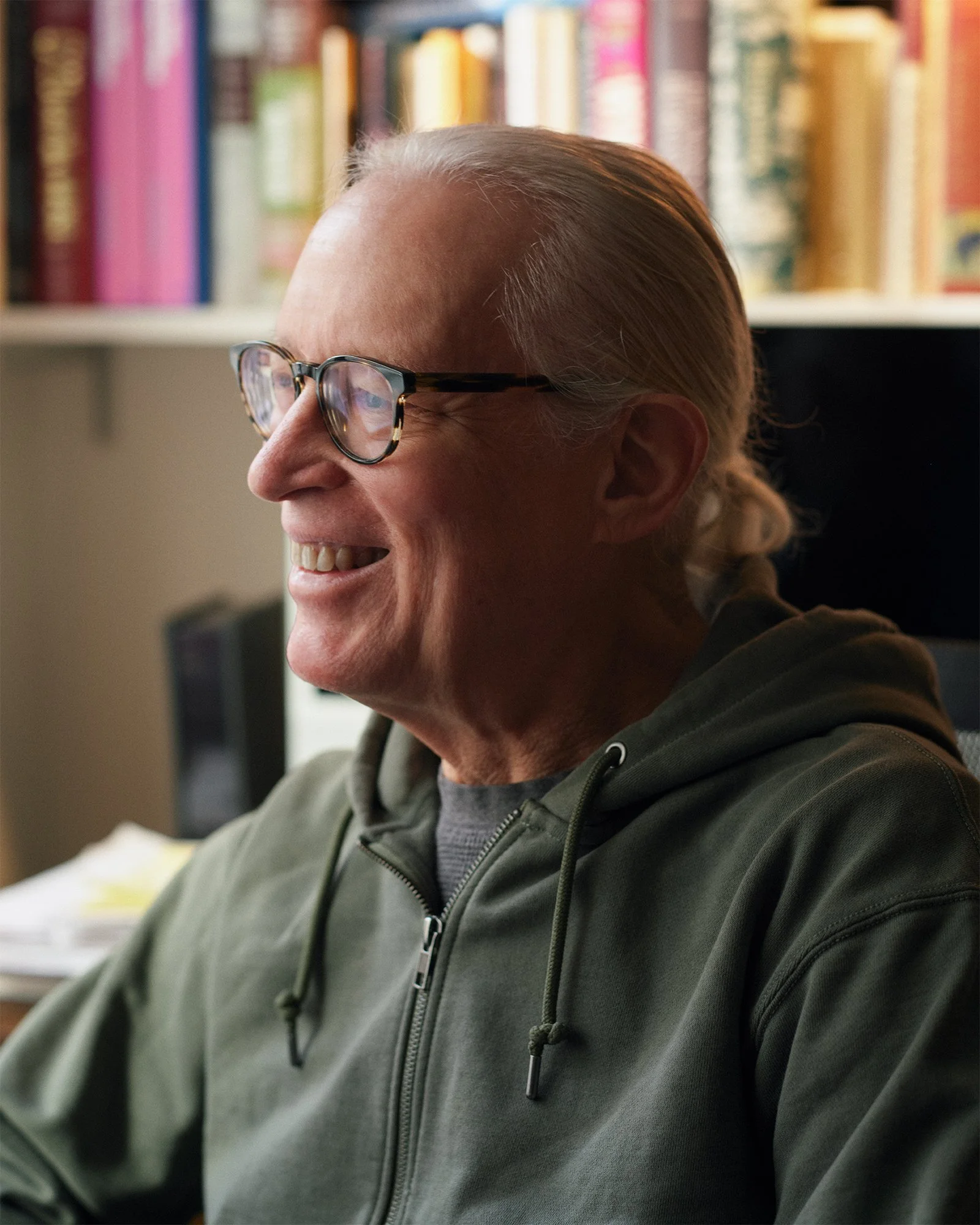
Photo by Jack Newton
For example, all of those papers around the country were developing their food and wine coverage at that time. They might not have had a full-time wine writer on staff yet, that didn’t exist before the ‘70s, but someone was writing about wine for them. Through the ’80s, people started to be hired for full-time positions. Now, almost all of that has disappeared. I think there are only two full-time wine-writing staff positions left in the U.S.—one at The Times and one at The San Francisco Chronicle with Esther Mobley, which has to cover wine because it’s the local industry. I’m not sure if The Wall Street Journal writer Lettie Teague is on staff full-time or not, but that could be a third.
When newspapers got hit hard economically, they all cut their cultural coverage. The Times, to its credit, doubled down on it. That’s a big reason it’s succeeded while so many other papers have struggled or failed.
Learning more about that has been pretty incredible. I’m reading Graydon Carter’s memoir, which makes it hard not to romanticize the magazine industry leading up to 2008.
Romanticizing it in some ways is completely understandable. Because back then, this was a profession that you could join and get paid. You weren’t going to get rich, but you could make a living, and that’s not true anymore in many ways.
Do you think that'll change over time?
That’s a great question. I think people are really working hard to find ways to monetize what they’re doing right now, but it’s not easy. Some of the best wine writing happening today is on Substack, and one of the best wine writers I know is still not having an easy time of it. They deserve to be able to make a living because they’re so smart.
The other thing about Substack is that I’m constantly discovering writers with really interesting points of view. At the same time, I don’t know whether they’re making a living from it. I suspect many of them have day jobs and are writing in their spare time, but I don’t really know how that’s going to affect things. I think the general public still doesn’t understand that creating content, if you want to use that phrase, is work, and that people deserve to be paid for it. It shouldn’t be an expectation that you can just click on something and have complete access to it.
In an age of social media and constant opinion sharing, do you think the role of a critic has changed?
Yes and no. I believe we can debate the role of a critic in any age and time and there will always be disagreements on what the role of the critic is.
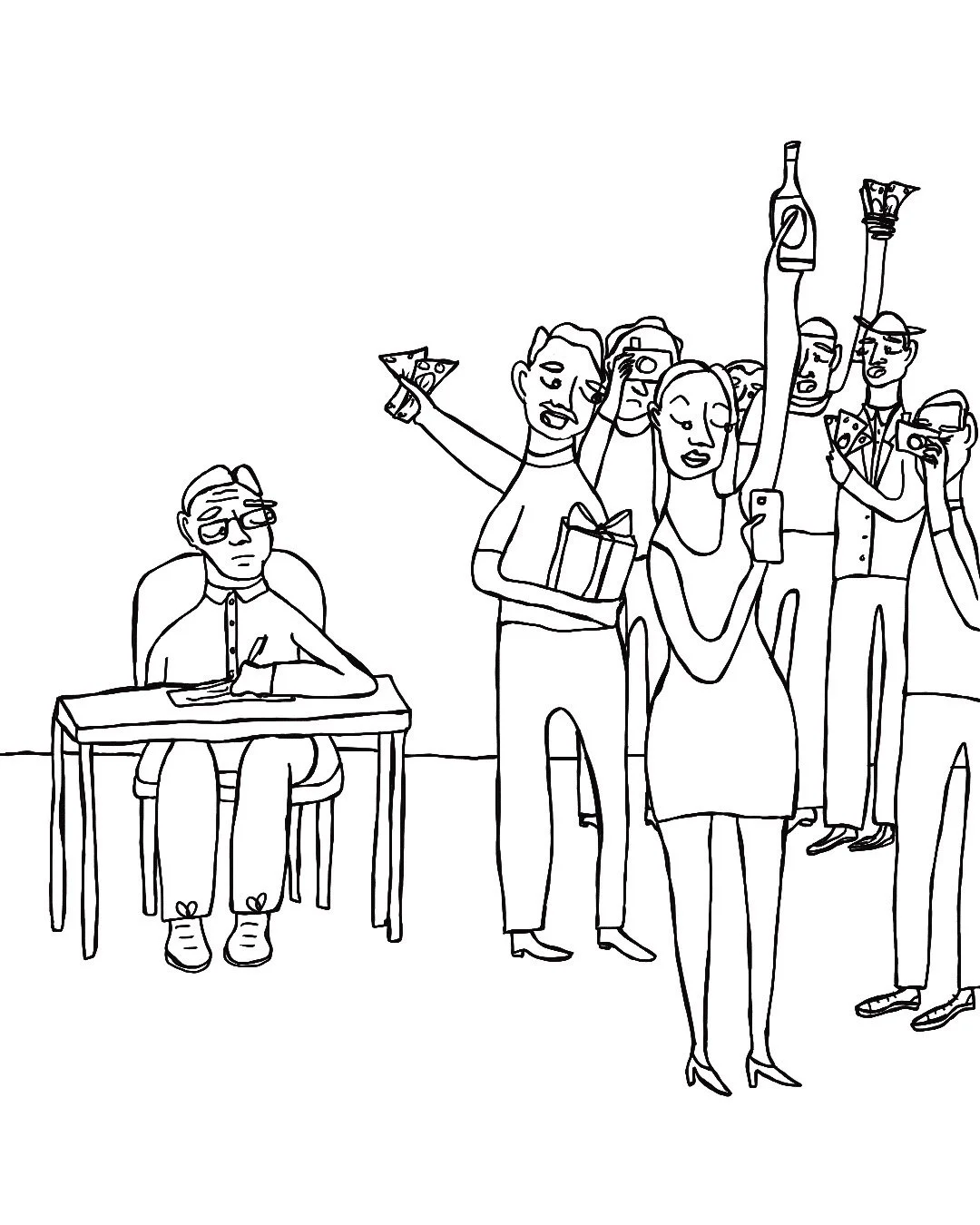
I personally believe that a critic is one who is opinionated and able to explain the reasons for those opinions in an understandable, coherent, and hopefully convincing way. A critic is not a so-called “influencer” paid to express certain views or someone who pretends to be objective while holding a point of view that is completely subjective.
I think critics need to be honest about their own opinions, clear and coherent in how they express them and I don’t think that’s changed in my lifetime. I haven’t changed my own understanding of what a critic does.
Illustrated by Cerise Zelenetz
However, what has changed, which is a different question, is people’s tolerance for and interest in critical opinions. I think too often in wine writing, people either want to be told exactly what to do or want their own opinions validated, and maybe not willing to engage as much as I sometimes wish they would. Maybe it’s reflected in our greater society which is so polarized and angry at the moment. People are either willing to say you’re right or you’re a complete asshole. I’m disappointed sometimes that people are just not willing to engage in a discussion of ideas. There’s less appetite for engaging with ideas.
I don’t want to be somebody that’s talking about the past all the time, but if you were to look on YouTube of old talk shows from the 1960s and ‘70s, you’re going to see writers debating ideas. You would see writers, filmmakers, and playwrights, in much more intellectual discussions on T.V. but it doesn’t really exist in the US anymore.
With your 20 Wines Under $20 column at The New York Times, do you still find it possible to stay under that price point?
I’ve found that the kinds of wines I used to be able to recommend at that price aren’t there anymore but other wines are. How long I’ll be able to do that, I’m not sure. We’ll have to see.
Just speaking generally, I’ve been saying the sweet spot for great value is $15 to $25 a bottle. I still think that’s certainly true and possible. But tariffs, when they really kick in, are going to affect that, especially since many of those wines are imported. It’s harder in the U.S., particularly on the West Coast, to make wines at that price point that are truly exciting. And that’s the crucial thing. The wines have to be interesting. It can’t just be a decent wine at that price.
If all you want is a wine that isn’t flawed, you can probably still find that under $10. But those wines are often manufactured and confected in ways that don’t interest me.
Photo by Jack Newton
You’ve watched wine culture evolve for decades. Is there a region or movement that, to you, best tells the story of how wine has evolved?
Yes, let’s take Sicily for a moment.
When I was younger, buying wine for my dinners in grad school, we’d be getting jugs of wine from Sicily that were super cheap. The same wine that someone’s grandfather kept in their fridge. Sicily produced more wine than any other part of Italy, but that’s what it was considered good for. You could make these cheap, big wines, but that began to shift in the 1980s. Producers started asking, “How can we be taken seriously as a wine region?”
Like many up-and-coming regions, they looked at what American critics thought were great. So they planted Merlot, Cabernet, and Chardonnay, and aged wines in new oak. Wines that were completely disconnected from the culture and place. They probably got high scores from Parker and Wine Spectator, but I don’t think they ever really struck a chord with people.
Things got interesting when they turned back to their own traditions. They began rejuvenating old vineyards, like those on Etna, that weren’t necessarily focused on Nerello Mascalese or Carricante, grapes we now associate with Etna today. Instead, there were blends of different grapes meant for old-school wines, where you couldn’t manipulate acidity or rely on technical corrections. Growers planted a mix of grapes, high acid, deeper color, tannic structure, right in the same vineyard to balance each other.
Once local varieties were taken seriously, Nerello Mascalese and Carricante on Etna, and in other places like the Vittoria region with Frappato, people began to discover how wonderful those wines could be.
You see versions of this story all over the world. Priorat, for example, where international grapes like Syrah were brought in alongside local varieties. Over time, the regions that leaned into their own culture and grapes, and farmed conscientiously, showed us just how compelling wines from around the world could be. This stands in contrast to the so-called era of “noble” grapes, a small group, mostly French, that were once considered the only grapes capable of making great wine.
That same dynamic exists beyond wine. For a long time in the U.S., people didn’t believe in their own regional food traditions. Local food restaurants weren’t valued because that wasn’t what was celebrated in the great capitals of the world. Instead, there was a sense that you needed a French restaurant to prove what you could do. But when you explore your own culture carefully and conscientiously, there’s a real thirst for both the food and the wine.
Photo by Jack Newton
For writers coming up now, especially those trying to find their voice and place in wine or food journalism, what advice would you give?
It’s a very difficult question, and maybe two separate things: finding your voice and finding a forum for that voice.
Finding your voice is crucial, and it probably takes a while before you feel confident. In wine, that’s especially tricky because so much of what you need to experience is expensive. It requires travel or going places where you need money. Too often, for understandable reasons, people rely on secondhand knowledge. But that often leads to the same conventional wisdom being repeated endlessly.
So first, finding your voice is important. The second part, finding a place for that voice, is much knottier. It’s hard to make a living writing now. I know some truly great writers who are struggling to earn a living with their writing.
So I think it has to be a calling. You have to really want to do it enough that you’ll write whether you’re being paid or not, and find other ways to earn a living. That’s sad in some ways, but I think that’s the level of commitment required now.
As for finding your own voice, I think people really need to trust themselves and their own experience of things. Don’t worry about what you feel you should believe or how you should react to something. You have to trust your own inner voice and feel confident in expressing it.
