
How to Visit a Winemaker and Be Invited Back
A guide to visiting independent winemakers who don’t have commercial tasting rooms, from reaching out to making the most of the visit.
Written by Rachel Signer
Artwork by Pat Thomas
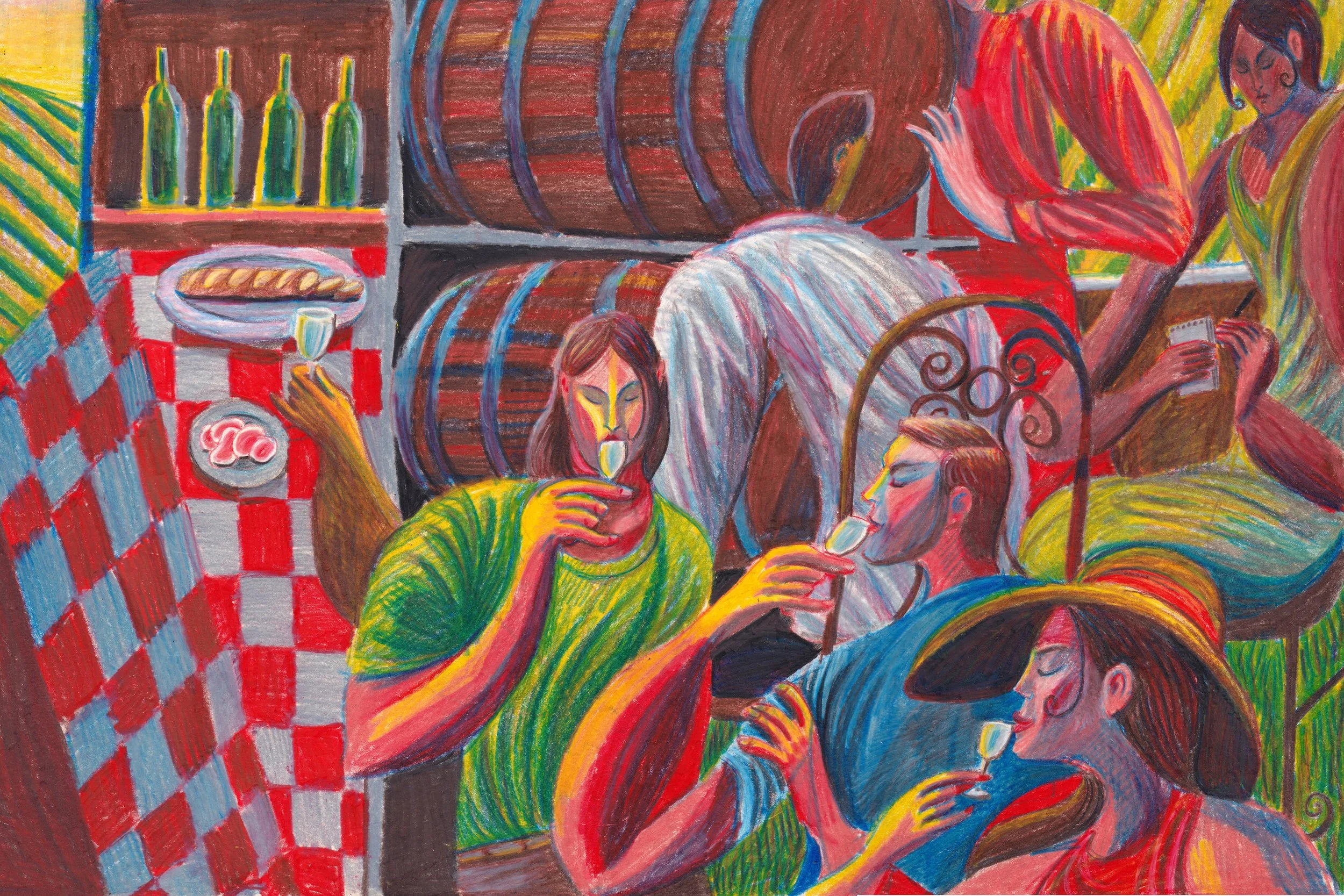
We had driven for hours through the heart of France, and now we stood before a locked gate, leading into a cave, centuries-old and dug into a hillside. Jangling about forty keys on a chain, Jean-Pierre Robinot finally found the one he wanted and opened it, welcoming us into the cellar where he ages his wines. One after another, there they were—ferments from two and three years earlier, settling into themselves. Jean-Pierre reached for a glass pipette, a long narrow tool used to draw wine from a barrel, and began pulling a sample from one of the barrels. We held out our glasses.
Hours later, we were led toward a house. In the kitchen, Jean-Pierre’s wife Noëlla was waiting with a spread of local goat’s cheeses, charcuterie, and homemade frittata. This wasn’t simply a wine tasting. It was a glimpse into the history of a place, an unforgettable encounter with a family that translates its philosophy into the bottle.
While unique, this visit stands alongside others that have shaped how I understand wine, and there’s no better way to learn about a winemaker’s craft than seeing the vineyard and cellar firsthand. You begin to form a relationship with wine that’s difficult to arrive at any other way.
That said, traveling to visit a winery, especially abroad, isn’t always easy, but it can be one of the most rewarding ways to deepen your understanding. A thoughtful outreach improves your chances of scheduling a visit and, just as importantly, helps set the tone once you’re there. Particularly with small, independent producers without a marketing team to conduct the tour, visits are rarely formal affairs. You’re entering their production space, and sometimes even their home, so it’s personal. Any time they offer takes away from bottling, pruning, paperwork, or the rare opportunity to rest from the constant demands of winemaking.
Having some understanding of how producer visits work will set you up for a smoother, richer, and more memorable experience overall.
How To Get In Touch With A Winemaker
A clear, personalized introduction will always go a long way. When you reach out through email or an Instagram message, make sure to include the below details to ensure your request is an easy yes.
Who you are and where you’re coming from
Why you’d like to visit—whether you’re simply a fan of their wines, work with the wines in some capacity, or are involved in a wine-related project
What you’re hoping to experience during the visit—a winery tour, a vineyard walk, or tasting current releases
Alternative ways for them to contact you
For bonus points, write in the language the winemaker speaks. Google Translate is your friend! That said, consider whether you’ll be able to get through the visit without a translator. If not, bringing someone who speaks the language can make a meaningful difference.
If you don’t hear back, don’t be afraid to follow up after a few days. Silence doesn’t mean they don’t want you to visit you—they may just be busy.
What To Ask For
When you request a visit, it’s worth considering what you’re really asking for. If you work in the wine industry, a producer might offer the full show: exploring a vineyard, tasting wines out of the barrel, trying the current releases, and perhaps even a meal with them. From the winemaker’s perspective, this is the best representation of what they do, and helps you, as a professional, work with the wines.
For wine enthusiasts, it's reasonable to expect to taste some of the range in-bottle and a cellar visit. If offered the chance to see a vineyard or taste from barrels, say yes. There’s nothing more instructive than seeing where the grapes are grown or trying the wine on its fermentation journey.
Timing
A visit might last an hour or maybe even four hours. How are you supposed to plan?
Make time for the unexpected. “I once showed up at Marcel Zanolari’s estate in Valtellina with my friend Alex for what was supposed to be a 30-minute visit,” says SWURL Founder Nathan Bodenstein. “Four hours later, Marcel, Alex, and I found ourselves herding escaped goats and horses up the streets of this small village back to another pen.”
A winemaker’s world can be infinitely interesting, especially if you move beyond the cellar itself into the realms of vineyards, gardens, and livestock. It’s beneficial to leave space for spontaneity in your schedule, just in case.
It can be tempting to squeeze multiple appointments into one day, especially when visiting wineries abroad. I made this mistake when visiting the Loire Valley, checking my driving times carefully on Google Maps in advance, then getting hopelessly lost on the rural roads around Muscadet, before finally arriving an hour late to my appointment.
The most practical approach is to schedule one visit before lunch and one after. Don’t overdo it.
There’s also the question of what time of year to schedule your visit. If you have flexibility, the very best time is at the tail-end of harvest. It’s not too cold or too wet, and you might even catch some fermentation or pressing in action. The second best time? Mid-spring. Vines are lush and ready to pop, with bottling, labeling, and vineyard work all underway. It’s a busy period, but not nearly as busy as the harvest itself.
What To Bring
If you’re being hosted without a fee, a simple gift is a thoughtful gesture. Some of the best gifts are the ones from your hometown, ideally something small and easy to transport. If you’re invited for a meal, asking what you can bring is always appreciated.
Do you work at a wine bar or shop back home? Have a business card ready. Names are easy to forget.
A note about footwear: wear flat, solid, water-resistant shoes. Vineyards are rarely forgiving of delicate footwear, and it would be unfortunate to turn down the vineyard walk if it’s offered. Think: a pair of Blundstones or Merrell’s.
Questions To Ask
Don’t be afraid to ask questions! Ask about the wines, the equipment, the vineyards. This shows interest and helps the visit develop a nice conversational flow.
Not sure what to ask? Try open-ended questions like these:
“How did you decide on this blend?”
“What do you like about this press/this bottling machine/these ceramic vessels?”
“Why were these grape varieties chosen?”
Buying Wine
If there isn’t a tasting fee, how should you compensate the winemakers for their time? Purchasing a bottle directly from the winery can be a nice way of saying thank you, but not every producer has a point-of-sale system or bottles stored onsite. If you really want to buy a bottle or two, consider asking in advance whether it’ll be possible. And bring cash just in case.
Afterward
A thank you email, text, or DM is always appreciated. Share photos and videos and tag them in your posts. If they ever travel to your town, try to show up to events and say hello. Send more visitors their way.
For many winemakers, hosting guests is a way of connecting to the broader wine world, reaching markets and cities they may not have time to visit themselves. A thoughtful visit can bridge that gap.
Ultimately, visiting a winemaker is as much about learning what’s happening in their vineyards and cellars as it is a cultural exchange. You walk away with new impressions of life and place, and often a few new friends, too. Through wine, your world feels a little larger, and a little richer.